Note to readers: The comments section below is now functioning. Please feel free to comment on any of my scribbling. I would like to hear what you think.
Key takeaways
Constitutional reforms and fiscal reform proposals likely a non-starter
Expect the UCP to move forward on an Alberta police force irrespective of what Albertans and rural Councillors think.
Expect Smith to move on restricting social services to immigrants
Tax collection and the Alberta Pension Plan actions will depend on next year’s referendum results.
Quite a lot has happened in Alberta politics since my last blog which covered Smith’s post-federal election speech (25 May 2025). Intervening events have included the 23 May by-elections which drew low voter turnouts while maintaining the current seat standings in the Alberta Legislative Assembly. Notable was the showing of both the NDP and the Republican Party of Alberta (RPA) in the Olds-Didsbury constituency. This closely monitored race featured the RPA’s leader Cameron Davies. Davies garnered only 18 per cent of the vote while Bev Toews of the NDP took 20 per cent of the vote leaving the UCP candidate Tara Sawyer with a very comfortable 62 per cent of the vote.
“More Alberta, Less Ottawa”
On St. Jean Baptiste Day in Quebec (June 24), Premier Danielle Smith announced the launch of the Alberta Next initiative which is expected to cost Alberta taxpayers $2-million. The initiative, like other UCP “consultations” is principally designed to learn from Albertans about their frustrations with Ottawa. It’s the usual confirmation bias which will inevitably affirm that the federal government must reverse “10 years of punitive policies…attacking Alberta’s economy and targeting its core industries.” This introduction is followed by an unusual definition of those “living, working, doing business and raising families are the ones to drive Alberta’s future forward.” Might that exclude persons who are homeless, adults were not “raising families” or “working” from their opportunity for input?
The panel
The panel led by the premier includes persons from every corner of Alberta except Alberta’s capital city.
- Honourable Rebecca Schulz, Minister of Environment and Protected Areas of Alberta
- Brandon Lunty, MLA for Leduc-Beaumont
- Glenn van Dijken, MLA for Athabasca-Barrhead-Westlock
- Tara Sawyer, MLA-elect for Olds-Didsbury-Three Hills
- Bruce McDonald, former justice, Court of Appeal of Alberta
- Trevor Tombe, director of fiscal and economic policy, University of Calgary School of Public Policy
- Adam Legge, president, Business Council of Alberta
- Andrew Judson, vice chairman (prairies), Fraser Institute
- Sumita Anand, vice president, Above and Beyond Care Services
- Melody Garner-Skiba, business and agricultural advocate
- Grant Fagerheim, president and CEO, Whitecap Resources Inc.
- Akin Osakuade, physician and section chief, Didsbury Hospital
- Benny Xu, community health expert
- Michael Binnion, president, Questerre Energy
- Stephen Buffalo, CEO, Indian Resource Council
It would be hard to find a more conservative body in the province led by the duo of Smith and Schulz who have been fighting the federal government ceaselessly for the past three years.
(Progress Report has found the non-MLAs of this roadshow have donated $44, 135 to the UCP. The biggest donor was Grant Fagerheim of Whitecap who has given $18,275 to the party since it was established in 2018.)
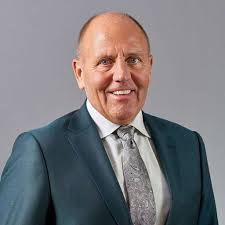
Source: Whitecap Resources
The other MLAs represent rural districts where separatists are more willing to be public about their views. This program of townhalls- mostly in rural Alberta- will foster more examples of grievance and agitation which is what the premier seems to want. Perhaps it will blow off steam. However, the situation is more volatile than in 2003 when Ian McClelland, an Edmonton Progressive Conservative MLA led a Legislative committee on the role of Alberta in Confederation, struck to respond to the Harper, Morton et al’s “Firewall Letter.”
The townhalls are taking place in
15 July Red Deer
16 July Sherwood Park/Edmonton
14 August Edmonton
26 August Fort McMurray
27 August Lloydminster
2 September Medicine Hat
11 September Lethbridge
15 September Airdre
17 September Grande Prairie
29 September Calgary
It is noteworthy that anti- separatist voices will be heard early on the “conversation,” while southern Alberta the core of separatist sentiment will wrap up the townhalls.
The panel
Some controversy has already been centred on the appointment of Professor Trevor Tombe, who is one of the most knowledgeable persons on fiscal federalism in Canada. Tombe, like many in the university community, eschew partisan politics so it is noteworthy that Smith was able to convince Tombe to join a panel heavily weighed to politicians (Smith, Schulz, van Dijken, Lunty, and newly minted Olds Didsbury MLA Tara Sawyer), ideologues (Judson, Fraser Institute), and energy industry executives (Buffalo, Binnion, and Fagerheim whose Whitecap Resources received investments through the AIMCo-led, NDP- sanctioned Alberta Growth Mandate).

In an interview with Graham Thomson, Tombe said “I’ll certainly be steering clear of the politics,” said Tombe. But then he added, “Maybe that’s naive for me to think that that’s possible.” But part of the mystery of the Tombe participation is that persons like Jack Mintz or Ted Morton were not chosen. Tombe was a big win for Smith because Tombe is not tainted with the same brush as Mintz and Morton, co-authors of The Moment of Truth, How to Think about Alberta’s Future, a 2020 book which contains dozens of argument for either a sovereign Alberta within a united Canada scenario, annexation or separation.
The site
The Alberta Next website is a very professionally produced site with particularly emotive pictures associated with the various claims. Alberta Next provides arguments for radically changing the confederation bargain. It is partly premised on the questionable claim that the federal Liberals and their NDP allies scared away a half trillion dollars in investment and has deliberately targeted Alberta’s energy sector which is purported to be the “driver of Canada’s economy.” We are now witnessing policy options like restrictive immigration measures become mainstream ideas which formerly had been relegated to extremist thinking. The Overton window has moved remarkably quickly in Alberta in the last five years with Smith’s ideological agenda accelerated this trend. One only needs to view the Alberta Prosperity Project’s website to realize how generally accepted equality of opportunity is so vilified and faith, family and freedom are reified.
The Warm-up
Smith’s six and a half minute video begins with beautiful Alberta landmarks and praise for Alberta’s entrepreneurship. The thrust is that Alberta has an “Ottawa problem”, a trope that has been repeated endlessly by the GOA’s propaganda machine. She enumerates the Trudeau policies which have presented meaningful challenges to Canada’s energy industry. These include Bill C-69, the so-called no-pipelines law and the requirement that all vehicles purchased must be EVs by 2035 which would purposefully reduce demand for petroleum products. These comments are built upon the 20 March nine demands the UCP government have put before Ottawa.
Six Policy Options
Federal Transfers and Equalization
The first policy issue is the fiscal arrangements. It is largely framed as hard-working Albertans subsidizing other provinces, particularly Québec and Ontario, under the equalization agreement.
Parenthetically, much of Alberta separation which I have encountered involves disdain, contempt and anger at Québec for “leeching” off Alberta. In a particularly vile episode on David Krayden’s “Krayden’s Right”, Jeff Rath counsel for the Alberta Prosperity project observes:
“What is the French culture? Being a bunch of parasitic socialists, a bunch of leeches that literally suck off of Albertans and can’t run their own god-dammed country without $15-billion a year from hard-working people to the West.”
Fiscal transfers and equalization are very hot buttons for separatists and that is what Alberta Next leads off with.
What if we cut out the middleman and instead sent 60% of all taxes straight to the provincial governments responsible for delivering health, education, and social services? Ottawa, in turn, would be able to end most transfer programs to the provinces along with all the strings, bureaucracy and waste attached to them.
In some other policy issues, the cons for a greater role for Alberta are provided but not in the case of fiscal transfers and equalization. The reform of equalization is one of the most complex because the principle of equalization is constitutionalized and politically is a non-starter for the other provinces because six of the ten provinces are typically recipients of this fiscal adjustment program. The equalization formula is complex which few educated Canadians understand. While tweaks could possibly be made, changes could never satisfy Smith and Alberta separatists.
Achieving a National Purpose- Putting Equalization Back on Track 2006 chaired by Allison O’Brien, formerly Alberta’s deputy treasurer, and commissioned by Stephen Harper’s government was an opportunity to meaningfully change the formula. While the panel made several recommendations to tweak the formula, the program is a foundational program which compensates provinces with weaker fiscal capacity to raise revenue.
According to the website, there is a $23-billion annual deficit posted in federal spending versus federal taxation, an amount that would stay in province if Alberta opted out of confederation. Cumulative amounts are obviously much larger.
I double checked this deficit claim with Finances of the Nation, a useful website which Professor Tombe was instrumental in establishing. The site provides charts showing the relative contribution, or receipts as a result of federal expenditure and revenue policies. Alberta has been a net contributor since 1972 when the province was on the cusp of an OPEC-fueled energy boom. On a per capita basis Alberta’s “donation” to the rest of Canada peaked in 2008 at $9,109 per capita or a total of $31.3-billion. In 2023, the per capita contribution was lower at $3,650 but Alberta’s population had jumped making the total “donation” of $17.5-billion.
How then is one to evaluate this “donation”to the rest of Canada? Alberta’s nominal (unadjusted for inflation) GDP in 2023 was about $450-billion with $17.5-billion represented 3.9 per cent. Each year this deficit amount theoretically would add to Alberta GDP, representing $3600 per Albertan. It is not a trivial amount and expect this to be featured heavily in “North American” studies commissioned by the provincial government from academics affiliated with the School of Public Policy and other academies.
The Alberta Next website solely looks at the dollars and sense of these policies. A more charitable perspective on these programs might elicit a collective sense of Alberta contributing to a better Canada. Expect more emphasis on people’s allegiance to Canada or Alberta to be part of the Alberta Next journey as Smith defends separatists’ right to freedom of speech, including hate speech. Given the non-response of the federal and provincial governments to Kenney’s equalization referendum, I can’t see Smith moving forward on this initiative until after next year’s referendum.
Alberta Pension Plan
As I have reported many times, the Alberta Pension Plan is essentially a tactic to access Alberta workers hard-earned savings and then pass it on to the government in power. Since Travis Toews’ first budget in 2019, the UCP government has been trying to get their hands on pensioners’ money. The Kenney government began with a takeover of the management of Alberta Teachers’ Retirement Fund. In addition, the government removed NDP policies to give pension trustees options to place their money away from AIMCo.

We have seen the UCP progressively politicize government sector pensions and this extends to the governance of the Alberta Investment Management Corporation (AIMCo). While the Canada Pension Plan Investment Board should not be given a blank cheque especially on their climate commitments, handing the money over to Stephen Harper and Stephen Lougheed would undermine all trust in Alberta pensions.
The arguments for an APP constitute an unabashed bribery of unsophisticated citizens. There are claims about an upfront payment of a happy senior woman opening a statement. Better Benefits for Seniors features an excited elderly man looking at a statement. Further claims include lower premiums for workers, and “Local Control & Boosting Our Economy” with the claim “Our investment decisions could also be steered clear of ideological decision making, and instead remain focused on the long-term rate of return for Alberta pensioners.”

In fairness to the website authors, three negatives are presented which should be huge red flags for all Albertans CPP recipients or workers.
- Uncertain payout;
- Long-term risks; and
- Portability concerns.
Final comment- There is no costing for what converting “Alberta’s” share of CPP assets will cost. This amount is likely north of $1-billion which would constitute a serious drag on earnings for the APP’s initial years. As noted below there is some costing under the Alberta Revenue Agency issue.
Given the opposition to the APP based on the government’s initial survey, I can’t see Smith moving forward on this initiative until after next year’s referendum.
Constitutional changes
Eight significant constitutional changes are proposed mainly the legacy of Reform Party and Fair Deal recommendations.
These recommendations are made without any discussion of the pros or cons of these ideas:
- Division of powers- greater powers to provincial governments over agriculture, immigration, natural resources, and health;
- Constitutional limits to federal spending power in areas of provincial jurisdiction;
- Strict representation by population which would weaken the political power of maritime provinces and increase representation for Alberta;
- Senate reform- either abolition or forum for provincial interests with parity of provinces (this was a major part of constitutional arguments from western Canada either through the provincial government or Reform party);
- Provincial appointments of King’s Bench justices rather than federal appointments;
- Expand Supreme Court to allow more justices from western Canadian and requiring all Supreme Court justices go through provincial appellate courts;
- Eliminating Ottawa residency for judges on federal courts ensuring more western representation (this was a recommendation of the Fair Deal panel); and
- Mandating provincial approval of appointment of Lieutenant -Governors.
These proposals address appointments, weakening federal financial powers, and increasing western representation in Parliament. The objective is to clearly weaken the levers given the Parliament of Canada under the existing Constitution Act and other constitutional instruments or conventions. These proposals taken together would significantly weaken the federal government’s role in economic and social spheres. These options, while practically unachievable at the present time, build a coalition with provinces fed up with federal overreach, notably Saskatchewan and historically Québec. These proposals also appear to play to centrist tendencies in the UCP party that are aimed at leveraging grievance to extract concessions from “Ottawa” (the Québec separatist strategy).
Provincial Police Force
The “briefing” begins by noting that already 80 per cent of Albertans are covered by municipal police forces. The main reasons given for establishing a new force include the forces would be they are “more local” and “more accountable.” In addition, a provincial police force would bring “safer rural communities.” And third, an APF would result in a “flexible, made in Alberta solution.” These reasons are squishy, aspirational claims and, if enacted should be subject to clear targets for strengthened accountability of municipal police forces. I anticipate the UCP will proceed with this option irrespective of what they hear from Albertans. The potential costs aren’t mentioned as a drawback.
Immigration
This section begins with the Smith regime labeling Canada’s immigration policy as “open borders.”
Sadly, Justin Trudeau’s Liberals upended Canada’s immigration system for over a decade by instituting an open borders policy that permitted over a million people in each of the last two years to enter Canada, often without any sort of proper vetting, job prospects or needed employment skills.
To counter this the panel suggests that the province can control immigration by withholding “provincial social programs to any non-citizen or non-permanent resident who does not have an Alberta-approved immigration status.” This measure would attack immigrants who must transition using social services. These are the poorer, non-professional families who may be suffering from trauma, language challenges and ill health. But these immigrants do not fit into the productive, tax-paying workers the UCP wants to attract, so they must be stopped or discouraged from entering the province.
The Smith regime expects “Ottawa” to take these measures to court. Rest assured the Smith government will address this hot button issue which is linked to concerns about rampant crime.
Significantly the picture used in this section is a Caucasian family of six holding the Canadian flag.

Tax Collection
The question is framed –“Should Alberta collect all provincial personal income taxes, rather than having Ottawa do it for us?
This framing appeals naturally to patriotic Albertans. Visions of high-paying Alberta jobs -rather than sending jobs outside the province are presented -up to 5,000 jobs! In addition “better provincial tax policy” is promised. “Better provincial tax policy” is code for tax community- writing of taxation policy to principally benefit groups like professionals (doctors, tax lawyers and accountants), and business.
However, there are some “potential drawbacks,” which include the time to take to build up the infrastructure and work force, large financial commitments ($750-million to $1.5 billion), and added complexity including the time and cost to individuals to file two personal tax forms.
Given the cost and effort to recruit staff, I can’t see Smith moving forward on this initiative until after next year’s referendum.
[In a future post, I will be writing about a FOIPP request, now under appeal, about the Alberta Revenue Agency which began in April 2024.]
Related Posts
Is Danielle Smith really a Separatist or Annexationist? Part 1
Is Danielle Smith really a separatist/annexationist? Part 3- Survey results
Is Smith really a separatist/annexationist? Part 4- ‘My fellow Albertans’